The production manager (PM) is the person who makes the show physically happen. If the tour manager owns the people and the plan, the production manager owns the stage, the sound, the lights, the video, and the trucks that carry them. This guide explains what a touring production manager does, how the role differs from a tour manager, and how to get into touring production.
The Short Answer
A touring production manager designs and runs the technical operation of a tour: specifying and budgeting the production, advancing technical requirements with each venue, hiring and managing the production crew, and running load-in and load-out each day.
Production Manager vs Tour Manager
| Production manager | Tour manager | |
|---|---|---|
| Focus | Staging, audio, lighting, video, rigging, trucking | People, schedule, travel, money |
| Talks to | Venue production staff, local crew, vendors | Promoter rep, venue management, artist team |
| Owns | The production budget and technical advance | The tour budget and the day sheet |
| Lives in | The venue from load-in to load-out | The schedule and the hotel |
On small tours, one person often does both jobs. On larger ones, the two work side by side and share the day sheet. See what a tour manager does for the other half.
What a Production Manager Does
Before the tour
- Working with the artist and creative team to turn the show design into a buildable plan
- Specifying and costing audio, lighting, video, staging, and rigging
- Choosing vendors and negotiating rental and trucking quotes
- Building the production budget, which feeds into the overall tour budget
- Hiring the production crew
- Writing the technical rider and preparing stage plots and input lists
Advancing
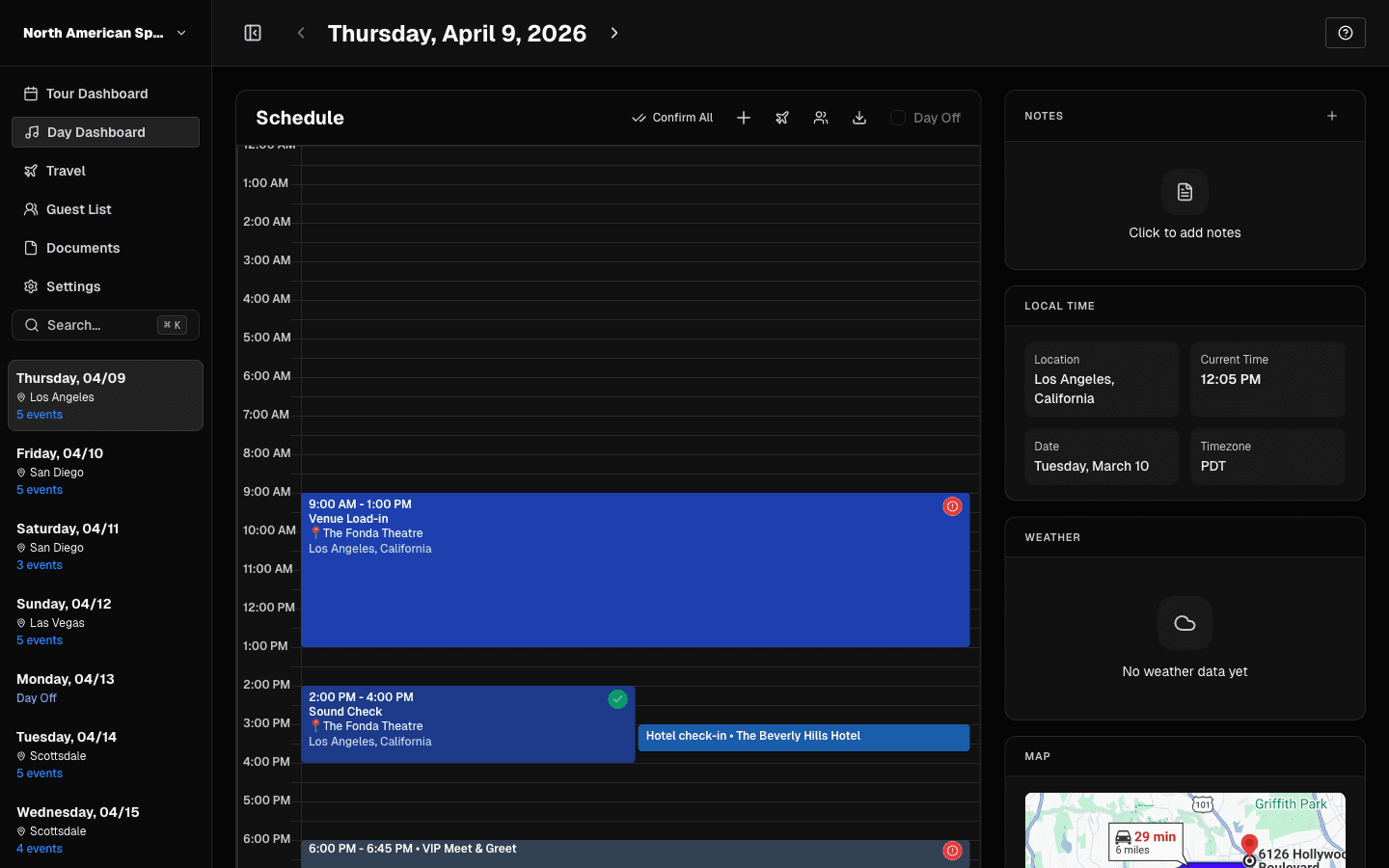
The PM advances the technical side of every show: stage dimensions, rigging points, power, loading dock access, local crew call, union rules, and curfews. The tour manager advances the rest. Our guide to how to advance a show covers the full checklist. Anything the PM confirms should end up on the day sheet.
On show days
- Running the load-in and coordinating local crew
- Making sure the production is built safely and on time for soundcheck
- Managing the changeover and the load-out
- Handling production problems with the venue, the crew, and the trucks
- Keeping the production spend within budget
Local Crew
Most venues provide local stagehands, riggers, and spot operators, and the PM schedules them against the show's needs. Getting the local crew call right is a major part of keeping the budget in line: too many people wastes money, too few makes the day run late. Check the call against the venue's rules, and confirm it in the advance.
Skills a Production Manager Needs
- Technical understanding of staging, rigging, audio, lighting, and video
- Safety awareness and the confidence to stop work when something is unsafe
- Budgeting and vendor negotiation
- Calm decision making when the venue is not what the advance said
- Clear communication with crew, venue staff, and the tour manager
How to Get Into Touring Production
There is no single route, but most people follow some version of this path:
1. Learn a trade. Work as a local stagehand, backline tech, audio or lighting tech, or in a venue production office.
2. Get on the road in any role. Many production managers started as an engineer or tech on tour.
3. Take on more responsibility. Run a small tour's production, or act as the assistant PM on a larger one.
4. Build relationships. Vendors, venue production managers, and other PMs are the people who recommend you.
5. Learn the money. Production managers who understand budgets and quotes get trusted with bigger tours.
If your goal is the tour manager side instead, see how to become a tour manager.
Working With the Tour Manager
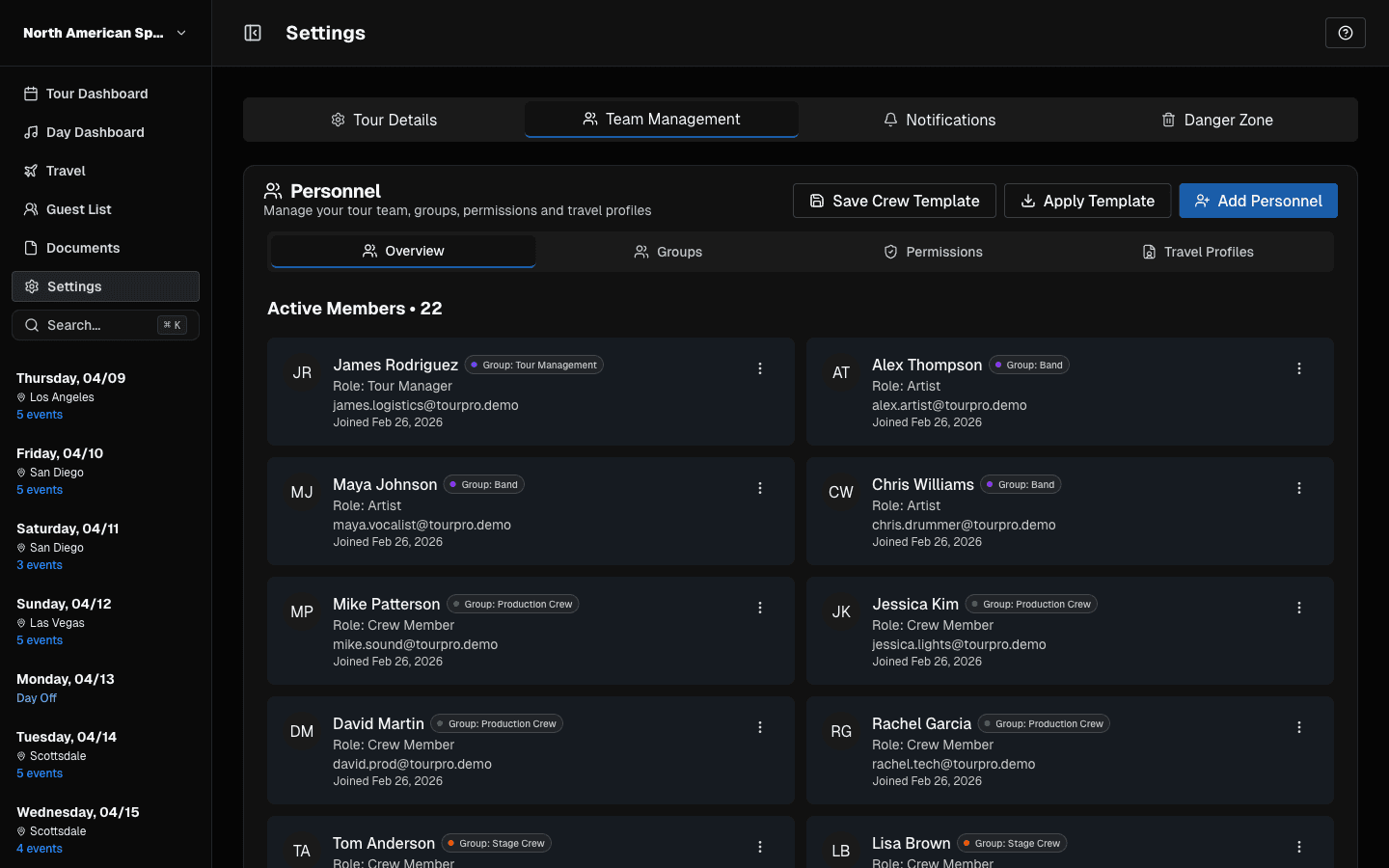
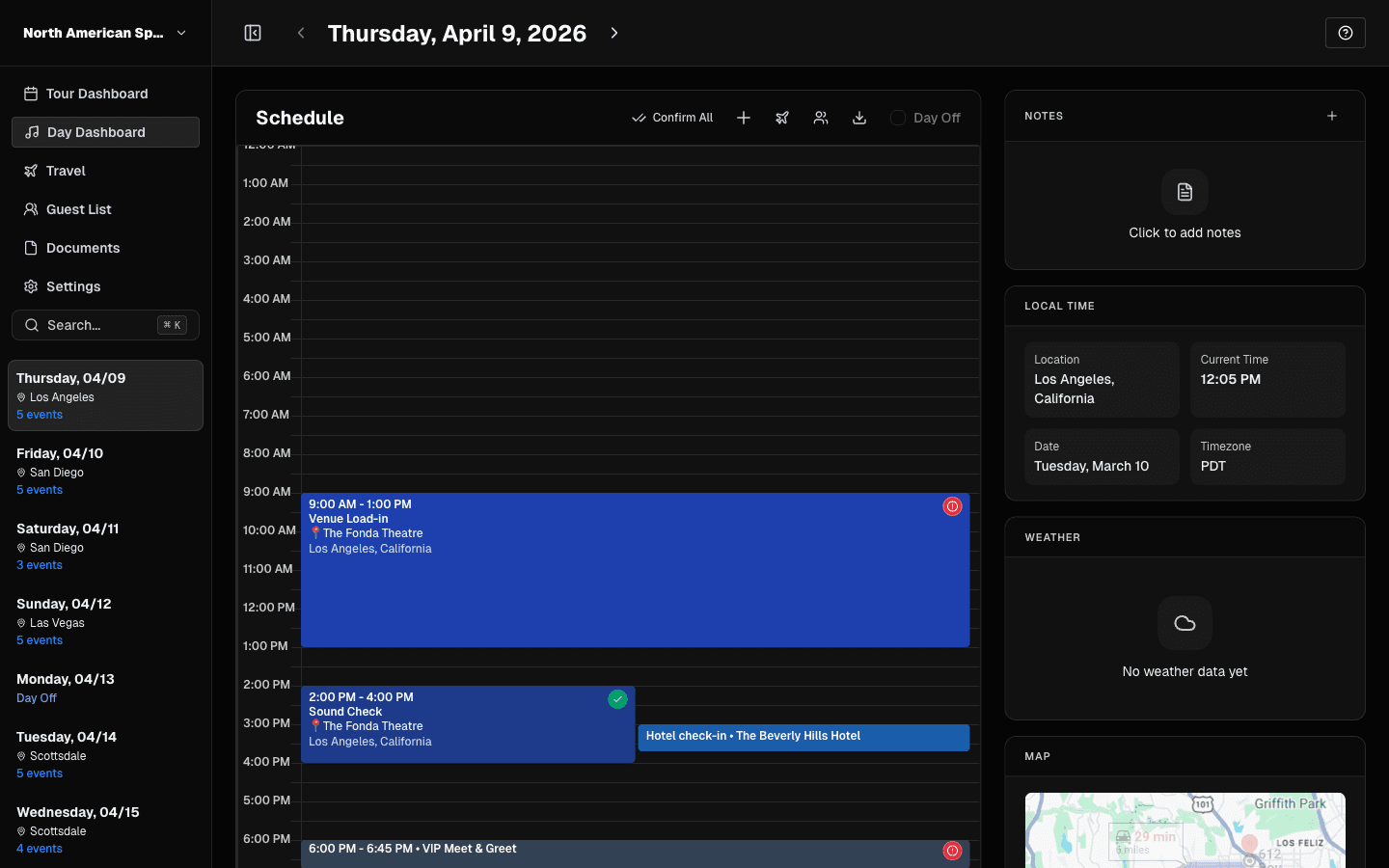
The best touring teams share information early and in one place. When the PM and TM both work from the same schedule, a late truck or a changed load-in time reaches everyone at once. TourPro keeps the schedule, advances, and day sheets in one workspace with role-based permissions, so production crew see what they need. It is free for teams up to 5. Terms used here are defined in the tour management glossary.