Road manager and tour manager are used interchangeably in a lot of conversations, and that is mostly fine. But on larger tours the two jobs are different, and knowing how will help you hire, get hired, or work out who to call. This guide explains what a road manager does, where the title overlaps with tour manager, and how the roles split as tours grow.
The Short Answer
On a small tour, a road manager and a tour manager are the same person. On a bigger tour, the tour manager runs the overall operation (schedule, travel, budget, settlement), while the road manager looks after the artist and band day to day: where they need to be, what they need, and keeping the artist's day running smoothly. Different regions and different generations of the industry use the titles differently, so always check what a job actually involves.
What Does a Road Manager Do?
A road manager is the on-the-ground person for the artist and band. Typical duties include:
- Getting the artist and band to the right place at the right time, from lobby call to stage
- Handling personal logistics, such as meals, laundry, rest, and quiet space
- Being the artist's contact on show day with the venue and promoter rep
- Running the band's routine, including soundcheck times and meet and greets
- Carrying and securing cash, passports, and important documents where needed
- Passing problems to the tour manager before the artist has to deal with them
If you are looking at the road manager role in music, you will see these duties grouped with tour manager duties on smaller tours, because one person does everything.
What Does a Tour Manager Do Differently?
The tour manager owns the plan for the whole touring party:
- Building the schedule and publishing day sheets
- Booking flights, ground transport, and hotels
- Advancing shows with every venue
- Collecting settlement and managing the budget
- Managing visas, permits, and insurance
- Communicating every change to the whole team
See the full breakdown in what a tour manager does.
How the Roles Split as Tours Grow
| Tour size | Typical setup |
|---|---|
| Club or van tour | One person is tour manager, road manager, driver, and merch |
| Theatre or small bus tour | A tour manager, often with a production manager or FOH engineer wearing extra hats |
| Arena or festival run | A tour manager, a production manager, and a road manager or artist assistant for the headliner |
The production manager is a third, separate role. They handle staging, lighting, audio, video, and trucking. Our production manager guide covers the difference in detail.
Road Manager Skills
- Patience and good humour at the end of a long day
- Discretion, because you are close to the artist's private life
- Reliable timekeeping and a habit of arriving early
- Practical problem solving: lost bags, missing guitars, sick band members
- Enough calm to say no to people who want access to the artist
Road Manager vs Tour Manager: Pay and Progression
Pay depends on the artist, the size of the tour, and your experience, so we are not going to give a single number. What is common is the path: many tour managers start as a road manager, driver, or assistant, learn how a tour works from the inside, and take on more of the planning over time. If that is your goal, see how to become a tour manager.
Working Together
If your tour has both roles, agree who owns what on day one. A good split:
- Tour manager owns the schedule, money, and anything involving outside parties
- Road manager owns the artist's day and anything involving the band's comfort and timing
- Both read the same day sheet, so there is one version of the truth
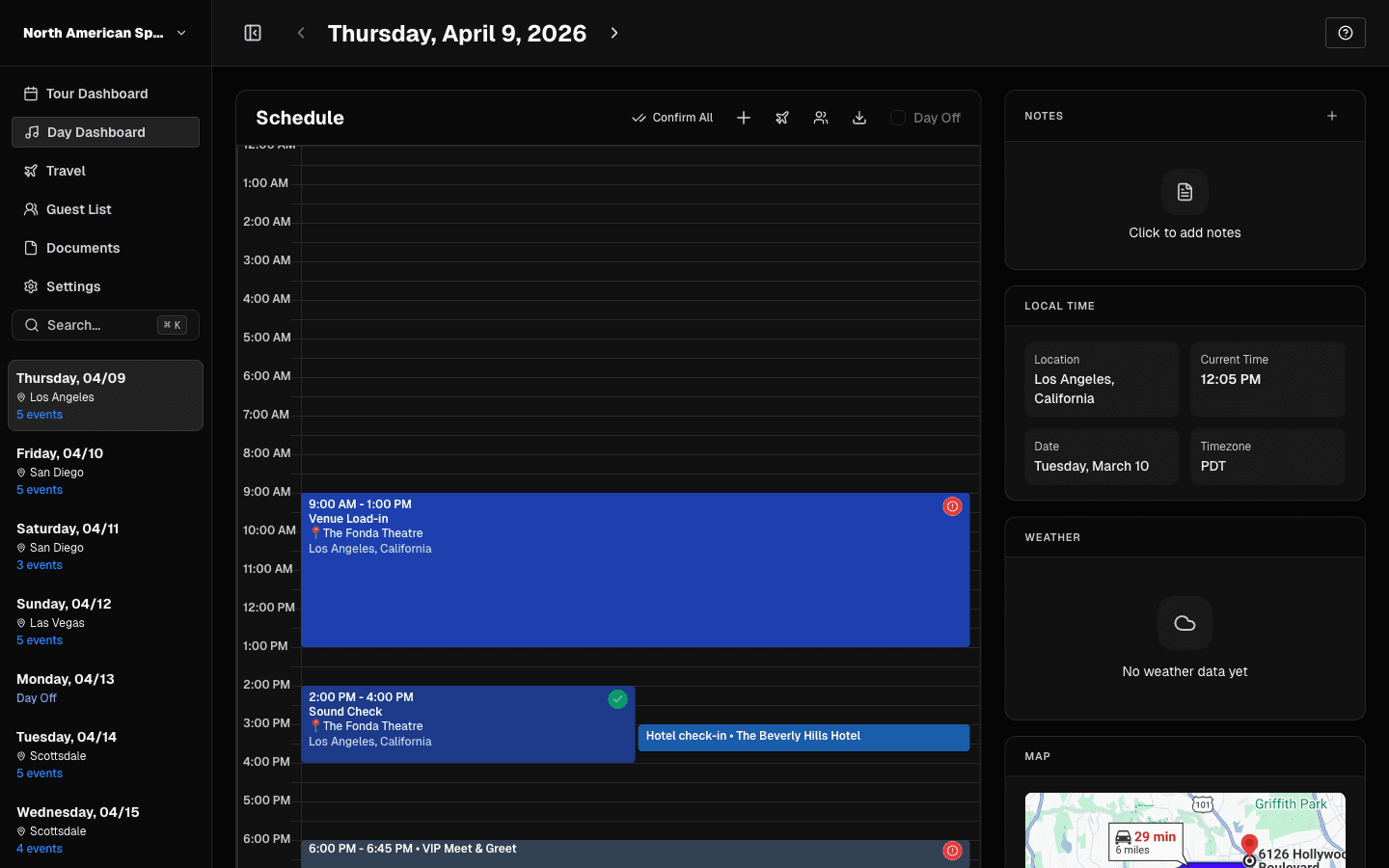
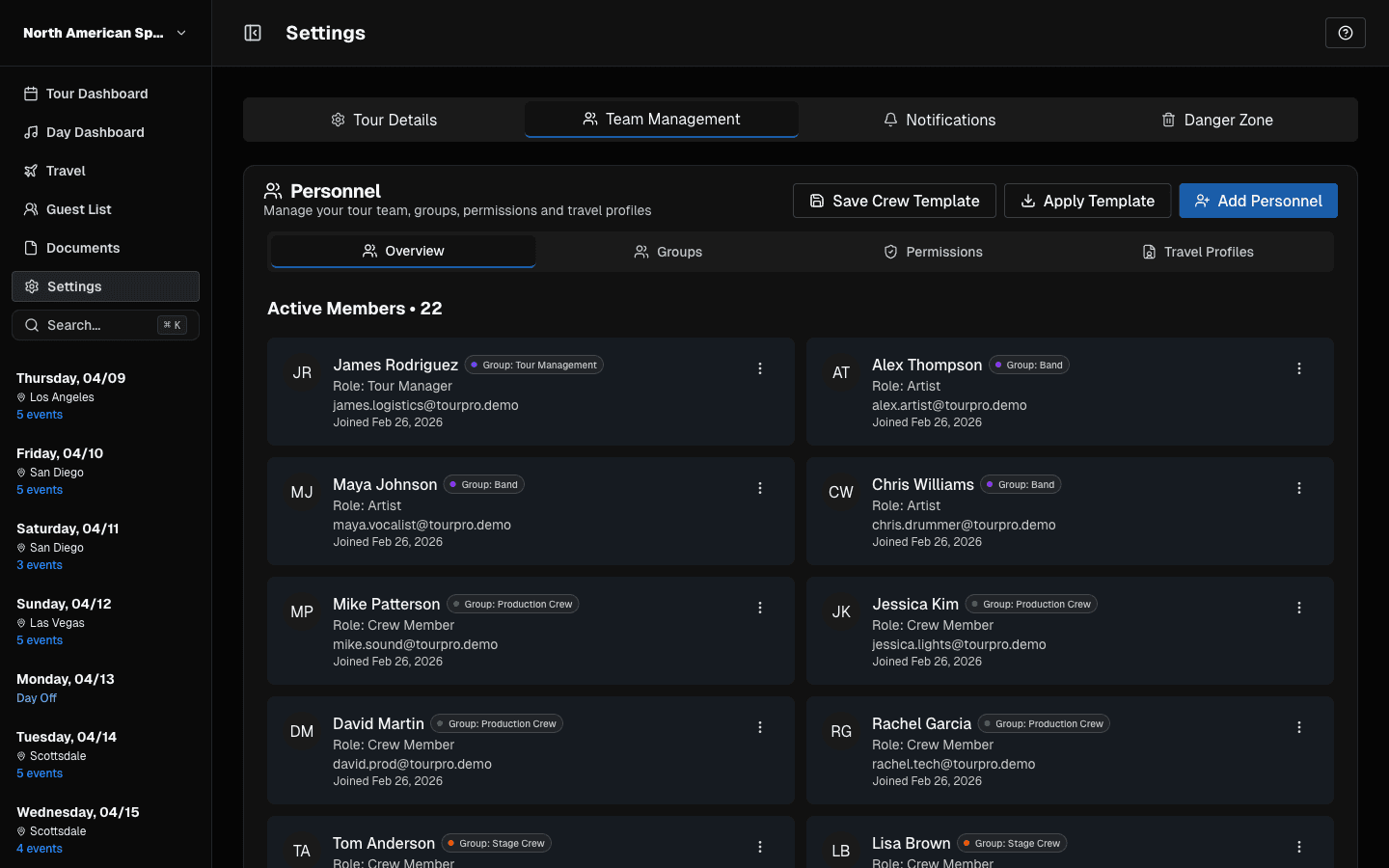
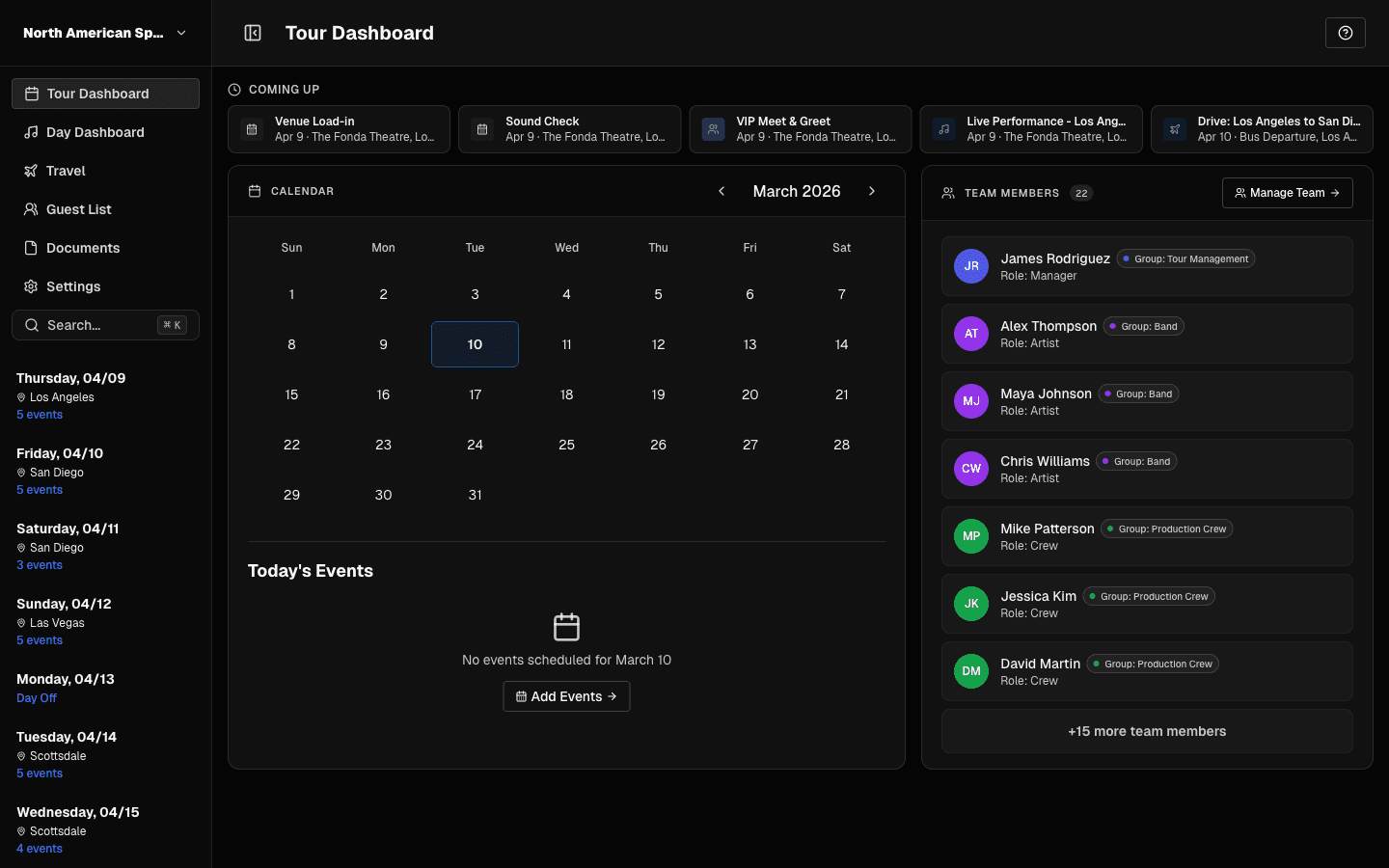
TourPro puts the schedule, travel, and day sheet in one place for the whole party, with permissions so crew see what they need. It is free for teams up to 5. For the terms used in this guide, see the tour management glossary.